Style, genealogy and performative tradition: voices of legong in Bali: an interview with Anak Agung Gede Oka Dalem about the legong of Peliatan
DOI:
https://doi.org/10.5965/2595034702322025130Keywords:
Legong, balinese dance, performance style, artistic genealogy, peliatanAbstract
The interview with Anak Agung Gede Oka Dalem offers an in-depth overview of the formation and consolidation of the Peliatan style of legong, from its arrival from Sukawati to its international dissemination. The testimony highlights the fundamental roles of masters such as I Wayan Lotring, Gusti Biang Sengog, and Anak Agung Gde Mandera, emphasizing the technical and expressive elements that define the local identity. Oka underscores the continuity of the style and the responsibility of preserving the inherited lineage in the face of sociocultural and educational changes.
Downloads
References
COAST, John. Dancers of Bali. London: Faber and Faber, 1953.
DAVIES, Stephen. The origins of Balinese Legong. Bijdragen tot de Taal-, Land- en Volkenkunde, Leiden, v.164, n.2/3, p. 194-211, 2008.
DIBIA, I Wayan; OKA DALEM, Anak Agung. Sang Maestro Legong dan Kebyar (Satya Bela Wira): Penjelajah Dunia dari Bali. Denpasar: Dinas Kebudayaan Provinsi Bali, 2021.
MCPHEE, Colin. A House in Bali. New York: The Asia Press with The John Day Company, 1947.
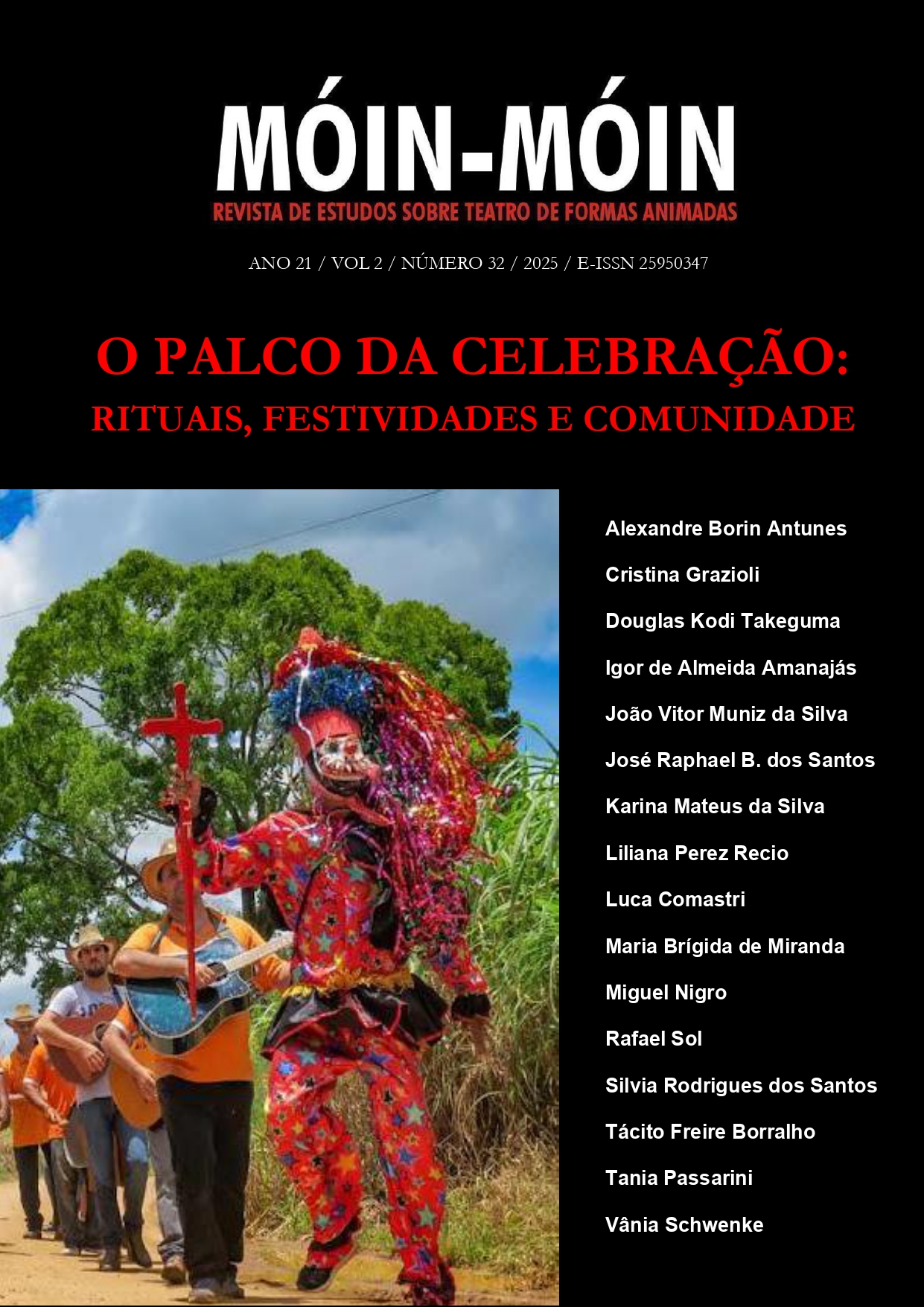
Downloads
Published
How to Cite
Issue
Section
License
Copyright (c) 2026 Móin-Móin Magazine - Studies in the Art of Puppetry

This work is licensed under a Creative Commons Attribution-NonCommercial 4.0 International License.
The readers are free to transfer, print and use the articles published in the Magazine, as long as there’s explicit mention to the author(s) and to Móin-Móin Magazine - Studies in Theater of Animated Forms and there are no changes on the original work. Any other use of the texts needs to be approved by the author(s) and the Magazine. In submitting an article to Móin-Móin Magazine - Studies in Theater of Animated Forms and have it approved, the author(s) agree to give away, without payments, the following rights to the Magazine: first publishing rights and the license for the Magazine to redistribute this article and its metadata to index and reference services that the editors consider appropriate.
The articles whose author(s) are identified represent the author’s point of view and not the official position of Móin-Móin Magazine. The author(s) commit to always mention the publication in the following way when publishing work in reference to the article published in Móin-Móin Magazine:
“This article was originally published by Móin-Móin Magazine volume (insert the volume), number (insert the number), in the year of (insert year) and can be accessed on: http://www.revistas.udesc.br/index.php/móin"
Plagiarism in any way constitutes an unethical publishing behavior and is unacceptable. Móin-Móin Magazine holds the right to use software or other plagiarism tracking methods to scan the submitted works.

This journal uses Attribution-NonCommercial 4.0 International– (CC BY NC 4.0).