Technologically Human: photographic manipulation as sensory amplification
DOI:
https://doi.org/10.5965/Keywords:
Rafael Cavalcante, Technologically Human, Photographic manipulation, Pandemic, University decentralizationAbstract
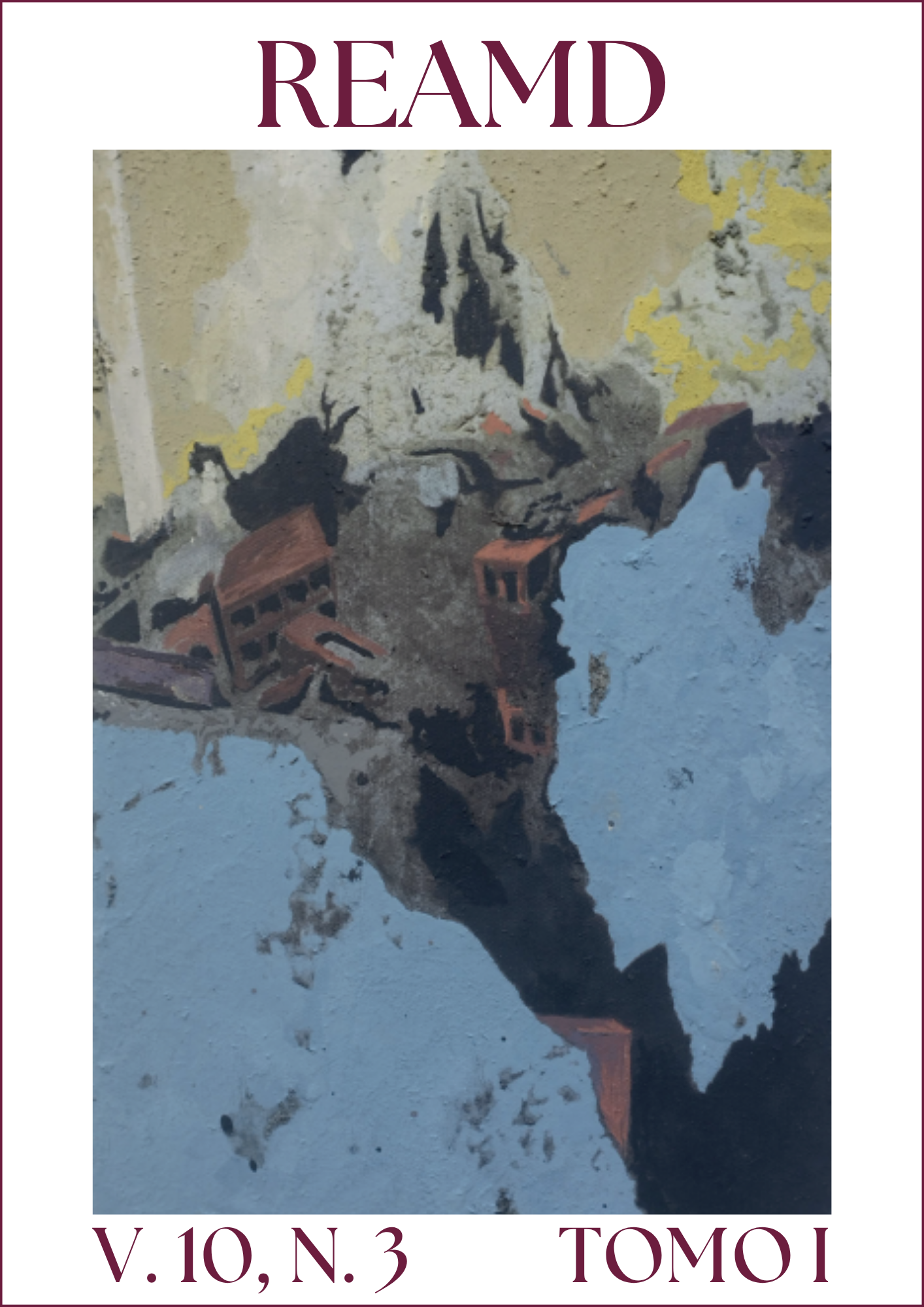
Several papers in Dossiê 22 address graduates and students from the Centro Acadêmico do Agreste (Federal University of Pernambuco) in Caruaru. As Professor Charles Leite noted in his interview with this Dossiê, the campus will celebrate its 20th anniversary in 2026. In recognition of this vital academic center in the interior of Pernambuco –and as a tribute to the Federal Government's policies expanding higher education into the country's interior –we aim to showcase a success story from the CAA. Such transformative experiences are undoubtedly mirrored, in various forms, across federal educational institutions throughout the vast interior of Brazil. To illustrate this, we examine the artistic journey of a Social Communication student who, like so many of us, found himself confined at home during the pandemic. Alongside his daily routines, he began to create by overlaying images onto a photograph displayed on his computer screen. Gradually shedding social constraints, he began working with images of his own naked body, integrating them into everyday objects. With his emotions raw and exposed due to social isolation, he transformed his anxiety and despair into images juxtaposed with or fused into his own physical form, mediated by digital manipulation. Upon returning to campus, he turned this creative experimentation into a rigorous academic pursuit. He deeply researched the history of photography, the artistic movements that elevated this visual language, and the works of creators who used their own bodies as canvas and clay. This research culminated in a Final Graduation Paper detailing his creative and production processes. Following his successful defense, he began giving interviews and school lectures about his “art”. Today, his work circulates across prestigious art circuits, earning awards and widespread invitations to exhibit his pieces. Although Rafael's initial creative spark was triggered by social isolation, the core phenomenon highlighted here is the life-changing power inherent in universities. Without the expansion of higher education into the interior, countless brilliant minds (curious, innovative, experimental, passionate, entrepreneurial, restless, inspiring, investigative etc.) would never stand a chance in our highly competitive world. Their voices would remain stifled, restricted to major metropolitan hubs. Therefore, recognizing the relevance of this Dossiê on tradition and innovation in education, we honor all those who brave the challenges of meeting the social demands of their professional fields. They connect students to opportunities that awaken deep potential and the drive to create, ultimately fostering a deeper understanding of humanity and building a better world – not just for future generations, but for those who are here with us today.
Downloads
References
AUMONT, Jacques. A Imagem. Campinas: Papirus, 1993.
BARTHES, Roland. A câmara clara: nota sobre a fotografia. Tradução de Júlio Castañon Guimarães. Rio de Janeiro: Nova Fronteira, 1984.
ECO, Umberto. Apocalípticos e integrados. 5ª. ed. São Paulo: Perspectiva, 1993.
FLUSSER, Vilém. Filosofia da caixa preta: ensaios para uma futura filosofia da fotografia. Rio de Janeiro: Relume Dumará, 2002.
JENKINS, Henry. Cultura da Convergência. 2ª. ed., São Paulo: Aleph, 2009.
MCLUHAN, Marshall. Os meios de comunicação como extensões do homem. Editora Cultrix, São Paulo, 1964.
SONTAG, Susan. [1978], On photography. In: Evans Jessica & Hall, Stuart (orgs.). Visual culture. Milton Keynes/London, Open University Press/ Sage. 2009.
VASCONCELOS, Rafael Cavalcante. Tecnologicamente Humano: a manipulação fotográfica como potencializadora dos sentidos. Trabalho de Conclusão de Curso (Comunicação Social). Universidade Federal de Pernambuco: Centro Acad. do Agreste. Caruaru, 2023. Disponível em https://repositorio.ufpe.br/bitstream/123456789/49740/4/TCC%20Rafael%20Cavalcante%20Vasconcelos.pdf. Acesso em: 02/05/2026.
Downloads
Published
Issue
Section
License
Copyright (c) 2026 Marcelo Machado Martins, Rafael Cavalcante Vasconcelos

This work is licensed under a Creative Commons Attribution 4.0 International License.
- Authors retain copyright and grant the journal the right of first publication, with work simultaneously licensed under the Creative Commons Attribution 4.0 International License, which allows for:
1. Share — copy and redistribute the material in any medium or format for any purpose, even commercially.
2. Adapt — remix, transform, and build upon the material for any purpose, even commercially.
The licensor cannot revoke these freedoms as long as you follow the license terms.Under the following terms:
1. Attribution — You must give appropriate credit, provide a link to the license, and indicate if changes were made. You may do so in any reasonable manner, but not in any way that suggests the licensor endorses you or your use.
2. No additional restrictions — You may not apply legal terms or technological measures that legally restrict others from doing anything the license permits. -
Plagiarism, in all its forms, constitutes unethical publication behavior and is unacceptable. This magazine uses iThenticate similarity control software.